
Lisa Johnson interview
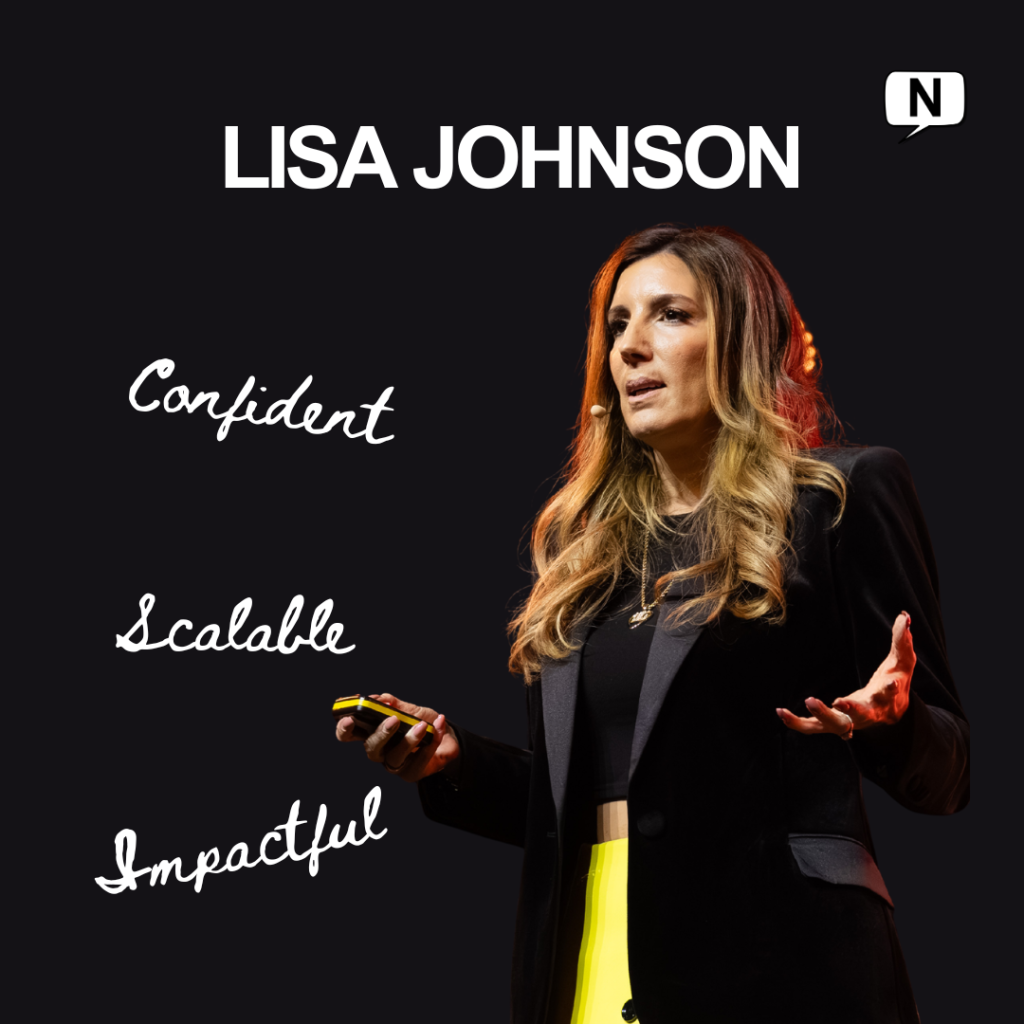
In this edition of Nuwsletter, we sit down with Lisa Johnson, a leading entrepreneur known for helping individuals turn their expertise into scalable, freedom-first businesses.
Lisa has built a reputation for challenging conventional approaches to business, combining bold thinking with clear, practical strategy. Her journey is one shaped by decisive action, strong self-belief, and a focus on creating income streams that support both growth and flexibility.
In this interview, Lisa shares her perspective on what it really takes to scale – from building consistent revenue and making confident decisions, to overcoming self-doubt and thinking bigger about what’s possible.
It’s a conversation about ambition, ownership, and designing a business that works for you.
Get to know Lisa Johnson
Based: Bedfordshire
My Favourite Business Book: “The E-Myth” by Michael Gerber
My Podcast Recommendation: “Big Deal” with Codie Sanchez
My Business Hero: I don’t have any heroes, but I do admire Sara Blakely
If I wasn’t a business owner I would have been: An actor
Outside of the office you can find me: Travelling around the world at every possible opportunity
What was the moment that you realised that you wanted to become an entrepreneur and why?
There wasn’t a lightning bolt moment where I woke up and thought, “I’m going to be an entrepreneur” it was far more practical than that. I was in debt, I had toddler twins, I was working ridiculous hours for someone else and missing my kids growing up. I remember thinking, “This can’t be it.”That feeling of being trapped financially and time wise was the catalyst.
Entrepreneurship wasn’t about ambition at first. It was about freedom. I didn’t start because I wanted millions. I started because I wanted control over my time and my income. The desire for impact came later. The desire for freedom came first.
What do they not tell you when you launch a business that you learned along the way and how did you overcome it?
They don’t tell you how lonely it can feel. Everyone talks about flexibility and freedom. They don’t talk about the self doubt at 10pm when something hasn’t worked and there’s no boss to blame. It’s all on you. They also don’t tell you that growth changes you. Success changes relationships. Visibility
brings criticism.
I overcame it by building community early. I found mentors. I surrounded myself with people who were slightly ahead of me, and I learned very quickly that resilience is a skill you can build.
A lot of people talk about mindset – what does a winning entrepreneurial mindset actually look like day to day in your view?
It’s far less glamorous than people think. A winning mindset is consistency when you don’t feel like it. It’s not spiralling when one thing goes wrong. It’s focusing on the biggest constraint in your business instead of chasing
shiny objects.
Day to day it looks like:
– Taking responsibility instead of blaming everyone else.
– Looking for solutions instead of validation.
– Playing the long game.
It’s not positive affirmations all day. It’s emotional regulation and strategic thinking under pressure.
As a Global Business Strategist working with various businesses, what are the common mistakes that business owners and founders are making in relation to their strategy?
Overcomplicating everything. Most businesses don’t have a strategy problem. They have a clarity problem. Maybe they’re trying to sell too many things, speak to too many audiences, be on every platform or scale too early.
Business is simple, it’s people who make it complicated! What do you sell? To who? How do you consistently generate leads? How do you convert them? That’s it. The businesses that win are the ones that master the basics.
Many founders struggle with being their own brand and becoming a voice of authority in their sector; What would you recommend to those who are afraid of stepping out of their comfort zone?
Firstly, understand that authority is built, not granted, you don’t wake up confident, you become confident through repetition. If you’re afraid of visibility, start small. Go live to 10 people. Write one honest post. Share your perspective even if your voice shakes.
The real shift happens when you stop trying to be impressive and start trying to be useful. And please accept and understand this. If you want influence, you will be judged, you will be targeted and you will be ridiculed. The goal isn’t to avoid criticism. The goal is to care more about your beliefs, your integrity and your ethics than you care about other people’s
opinions. Sounds easy, but it really isn’t at times.
What’s a business risk that you took that paid off, and one that didn’t? Why didn’t it work?
First is launching my signature programme One to Many during unprecedented uncertainty. It was 2020. Covid. Would anyone buy? The world felt unstable, but I had an inkling that people needed recurring revenue models more than ever. They didn’t know if they would have jobs to go back to when/if this was all over. We ran a webinar. We made £1 million in an hour.
The risk that didn’t pay off was expanding too fast at one point. I assumed what worked in one market would automatically work in another.
It didn’t fail catastrophically, but it taught me that growth for the sake of growth is irrelevant. What matters is your health, your family, your friends, not arbitrary financial goals imprinted on you from a crowded and noisy online space, because growth without alignment is expensive.
You didn’t hire anyone or run any paid ads until you hit a million pounds. Could you tell us more about that and the reasoning behind it?
I wanted profit before polish. I see so many people hiring too early or running ads to prove something. I focused on organic growth. I grew and nurtured an email list. I built connection and trust. I reinvested carefully.
By the time I hit £1 million, I understood my business inside out. When I did hire and run ads, it was strategic, not desperate.
You are also a bestselling author, please tell us more about your book?
My book is called Make Money Online and it became a Sunday Times bestseller. It’s essentially the blueprint for how I built recurring revenue streams from scratch. No jargon. No hype. Just step by step strategy around courses, memberships and scalable offers, mixed up with a few (hopefully) funny anecdotes from my life.
But underneath the strategy, it’s really about belief. About understanding that your knowledge is not common knowledge. The book gives structure. But it also gives permission.
You have founded several companies, for those considering establishing another business what would you tell them?
Don’t start something new because you’re bored, start something new because there’s strategic alignment. A second or third business should leverage what you already know, your existing audience, your existing credibility. It shouldn’t be a distraction from your core
revenue.
What does success mean to you now compared to when you started?
At the beginning, success meant a few things Money. Security. Proving people wrong. Now, success means less about growth, it’s more about alignment and impact. If I can do what I firmly believe is right, regardless of the comeback and the criticism, if I can help others achieve what they are capable of, if I can generate the time to bring two amazing, polite, opinionated and respectful young men up in this challenging world, then I will have succeeded.
What advice would you give to someone launching a business today?
Start simple. Pick one clear problem. Solve it well. Build an audience before you build complexity. Focus on recurring revenue early. And understand that business is not a get rich quick scheme. It’s a long game, but if you build it ethically, strategically and consistently, it can change your entire life, and I’m living proof of that.
